Inventor and interdisciplinary scientist adept at building biosensing technologies from first principles through to working products. Proficient in computational physics with doctoral experience simulating quantum, biological and electrochemical systems. First employee at Osler Diagnostics: set up the research laboratory from scratch, helped scale the company to over 100 people, and contributed to a $30M Series A funding round.
An effective communicator with a proven record of innovation including patented biosensing technologies and highly original research concepts. Advises multiple biosensing companies through private consultancy, rapidly deploying advanced computational models to address bespoke R&D requirements.
Provided consulting to multiple clients on proprietary biosensing methods — delivering literature reviews, scientific advice on electrochemical devices, and bespoke software, simulations and models. Clients include Osler Diagnostics, Sense-Bio (now OraSure Technologies), and the Compton Group, Oxford.
Project lead for Blood Chemistry R&D. Managed 5–10 scientists to develop quantitative electrochemical assays for proteins, ions and metabolites. Translated assays to a second-stage prototype, collaborating across electronics, microfluidics, and embedded software teams. Invented a novel method for high-throughput electronic multiplexing.
First hired employee. Established the research laboratory and translated biosensing technology from the University of Oxford into the company. Delivered a functioning prototype point-of-care device capable of measuring multiple protein biomarkers in blood, contributing to a $30 million Series A raiser.
Thesis: "Memory in Models of Molecular Assembly". Supervised by Dr Chiu Fan Lee and Dr Thomas Ouldridge. Funded by the President's Scholarship. Passed examination February 2026, examined by Prof Jon Doye and Dr Ruben Perez-Carrasco. Work presented at Physics of Emergent Behaviour IV (Harrogate, 2023), Imperial Early Career Research Symposium (2023), and Smart Condensates and Droplets Symposium (Cambridge, 2024).
First Class Honours (average 80%), first prize for best thesis. First on all 16 examination papers. Master's thesis: "Application of the Frozen Gaussian Approximation with Stochastic Surface Hopping to Non-adiabatic Photochemistry".
Master's Thesis — University of Oxford
View thesis ↗Angewandte Chemie International Edition, 55(13), 4296–4299
doi:10.1002/anie.201509017 ↗U.S. Patent Application US 2023/0020979 A1 — Electrode functionalised with an antibody and corresponding detection method
US 2023/0020979 A1 ↗A selection of work spanning computational science and music technology.
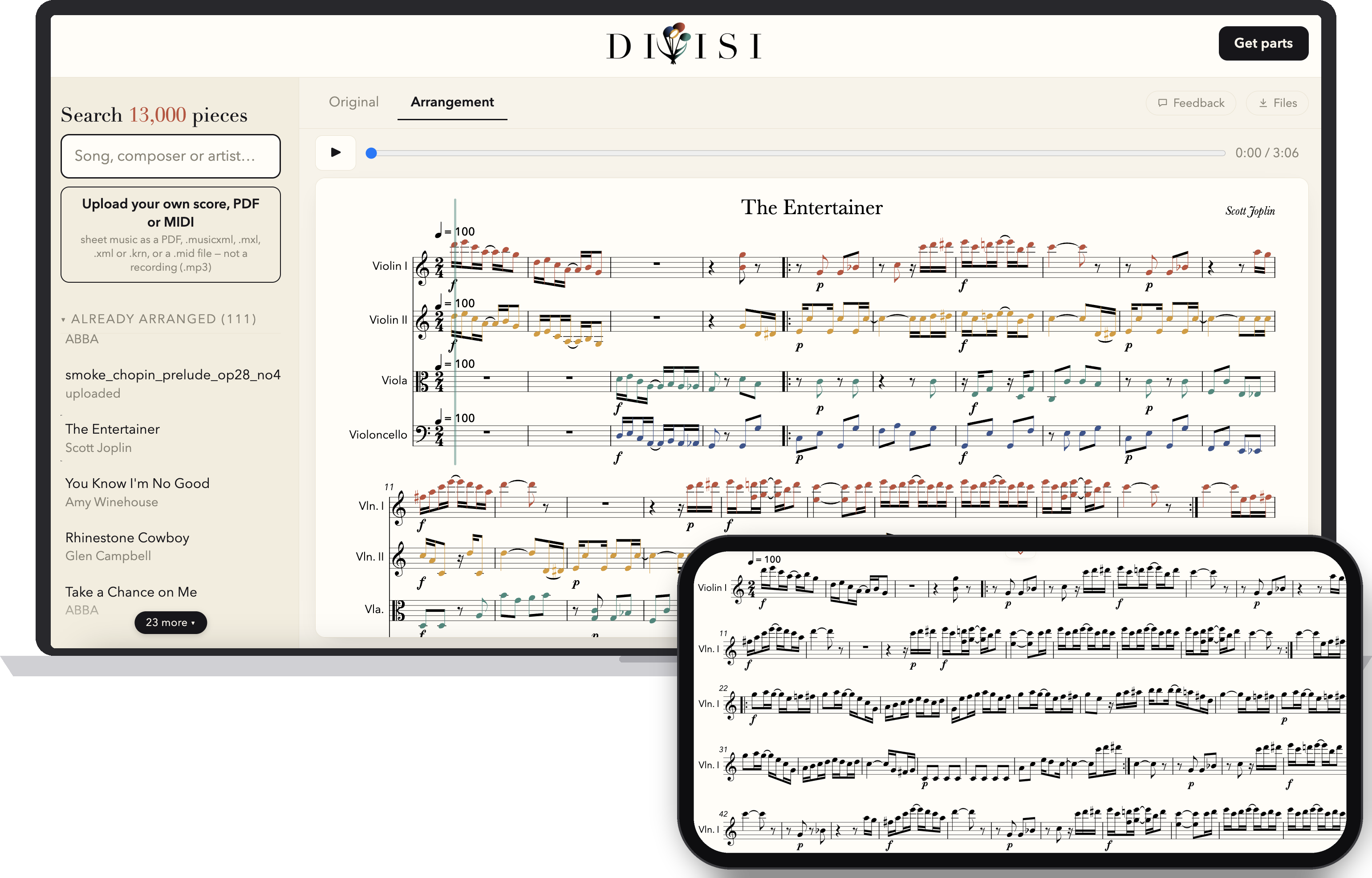
Divisi arranges any score, MIDI recording or leadsheet into playable string-quartet or brass-band parts, sent to each musician's phone or iPad as a QR-coded part. A machine-learned model, trained on hundreds of professionally engraved quartet scores, choses who plays each note and checks its own output against that same corpus for register, doubling, and playability.
The app is currently in active development and testing, having received interest from wedding bands and quartets.
Python · FastAPI · PyTorch · music21
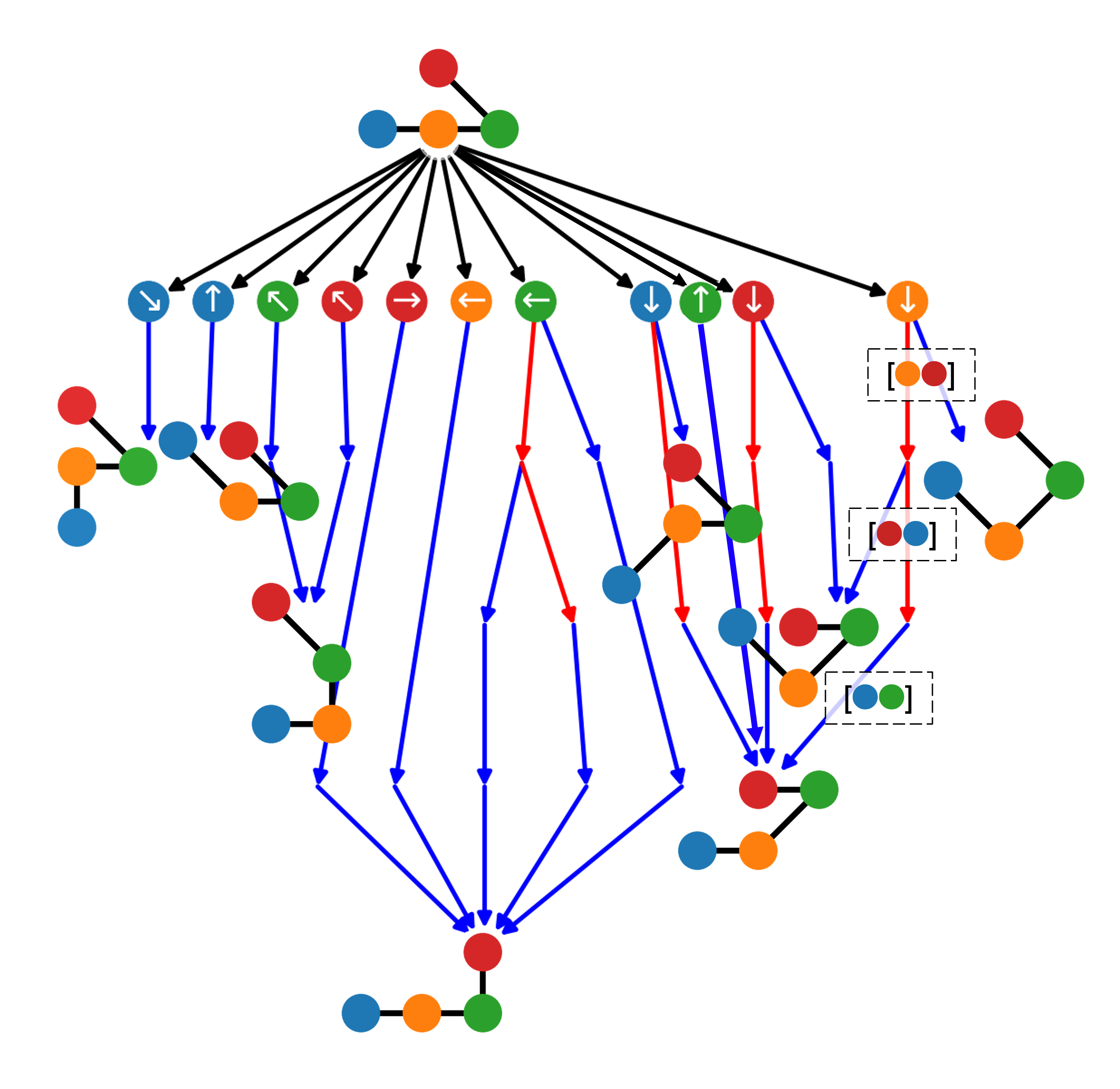
Checks whether a Monte Carlo algorithm obeys detailed balance, the condition it needs to correctly sample its target distribution, and returns an exact and deterministic PASS or FAIL rather than a statistical estimate.
Built first in Mathematica, then rewritten in Julia, it grew out of PhD work certifying novel Monte Carlo algorithms for protein self-assembly.
Julia · Lean · Wolfram Language
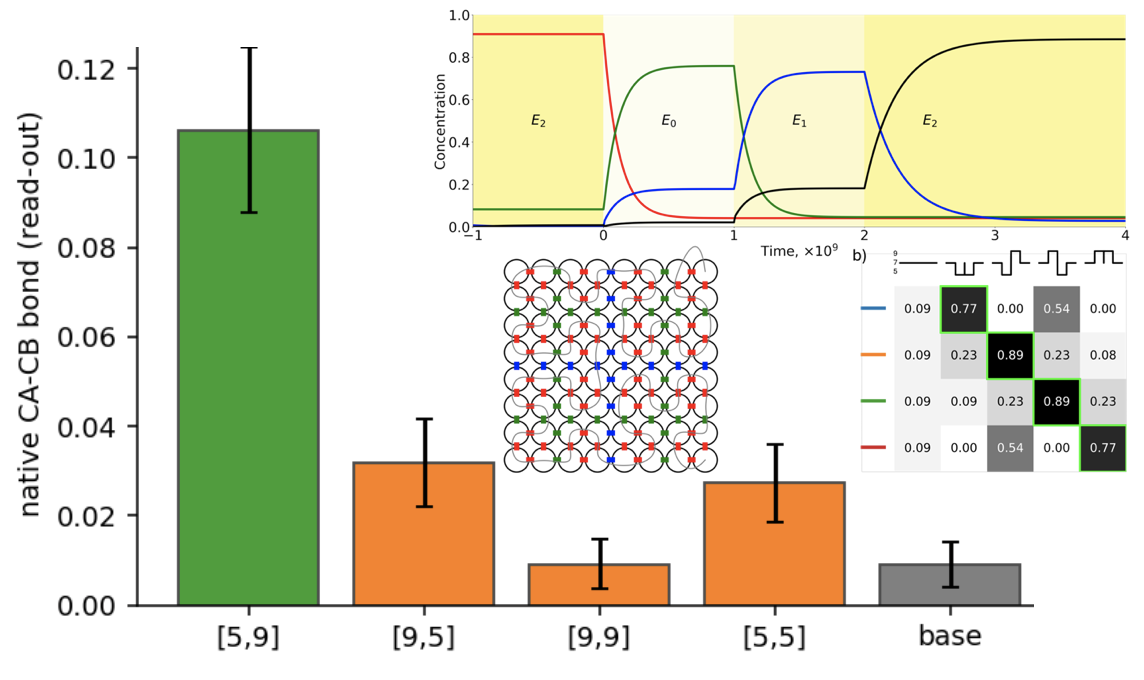
The temporal classifier is a designed chemical reaction network that folds only when acidity arrives in one specific order, not under a reversed, sustained, or resting signal. I trained its reaction rates end-to-end with automatic differentiation in JAX.
I then reproduced the same behaviour in a three-dimensional Brownian-dynamics polymer with explicit charge geometry, confirming the classification survives the move from an idealised well-mixed model to real spatial dynamics. The work sits at the centre of my PhD research on kinetically controlled molecular memory.
Python · JAX · DiffraxAvailable for consulting engagements, research collaborations, and conversations about biosensing, computational science, or creative technology.
[email protected]